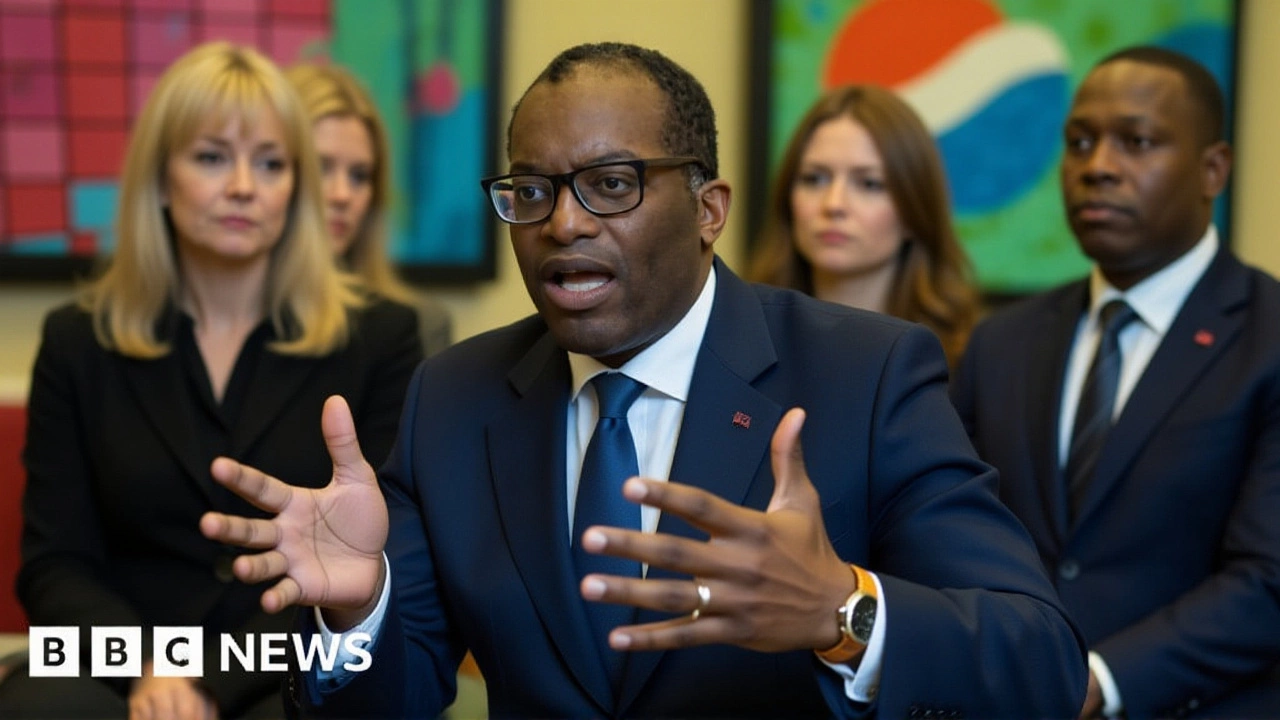
The International Monetary Fund didn’t just raise an eyebrow—it issued a formal, fiery warning to Kwasi Kwarteng, the UK’s Chancellor of the Exchequer, during the IMF Annual MeetingsWashington, D.C.. The message? Britain’s unfunded £45 billion tax cut plan, unveiled on September 23, 2022, was putting the country’s fiscal stability at risk. And for the first time in decades, the IMF didn’t whisper behind closed doors—it sent a letter that made headlines across global markets.
The Unprecedented Rebuke
Typically, the IMF avoids public scolding. It offers quiet advice, technical assessments, and behind-the-scenes guidance. But this? This was different. According to Faisal Islam, BBC Economics Editor, the IMF’s intervention was "without a clear precedent" in modern economic history. The letter didn’t just express concern—it warned that the UK government was "at risk of being knocked off course" in its efforts to repair public finances. Markets took notice immediately. Bond yields, which had been hovering around 3.5% in late September, jumped to 4.5% by October 10. The pound plunged to $1.03, its lowest level since 1971.
The trigger? A Mini Budget that scrapped the top 45% income tax rate and slashed the corporate tax rate from 19% to 15%—all without any clear plan to offset the revenue loss. No costings. No forecasts. Just bold promises. And the market reacted like a house of cards in a hurricane.
Market Turmoil and the Bank of England’s Emergency Move
By September 28, 2022, UK government bonds—gilts—were in freefall. Pension funds, heavily leveraged and holding vast amounts of these bonds, faced margin calls they couldn’t meet. The Bank of England had no choice but to launch an emergency £65 billion bond-buying program to prevent a systemic collapse. That’s right: the central bank, traditionally a defender of market discipline, became a buyer of last resort.
It was an extraordinary step—and one that only deepened the perception that the government’s plan was reckless. As Marketscreener reported, the IMF’s core fear wasn’t just short-term chaos. It was long-term debt sustainability. The UK’s debt-to-GDP ratio, already rising after pandemic spending, could spiral out of control if the tax cuts were permanent and growth didn’t materialize.
Kwarteng’s Sudden Exit
On October 12, 2022, as the IMF’s rebuke became public, Kwasi Kwarteng abruptly left the annual meetings in Washington, D.C. and flew back to London. He didn’t stay for the closing sessions. He didn’t hold a press conference. He just left.
According to Investment Week, "expectations of a Mini Budget U-turn continue to grow." The message was clear: the world’s financial institutions, including major finance ministries in Germany, France, and the U.S., were aligned in their alarm. The UK wasn’t just making a policy mistake—it was isolating itself.
Historical Echoes: 1976 Revisited
There’s a ghost in this story: the 1976 sterling crisis. Back then, the UK was forced to seek a £2.3 billion IMF bailout after a run on the pound. It came with harsh conditions: spending cuts, wage freezes, and austerity. The country never forgot it.
Now, in 2022, the IMF wasn’t offering help—it was warning the UK not to need it. The irony was thick. Back in ’76, the government was over-spending. Now, it was over-cutting. Both were fiscal gambles. But this time, the gamble was made by a new Prime Minister, Liz Truss, who had appointed Kwarteng just six weeks earlier on September 6, 2022.
It was a high-stakes bet on "Trussonomics"—the idea that tax cuts would spark growth so powerful they’d pay for themselves. But growth doesn’t happen in a vacuum. It needs confidence. And confidence, as markets showed, evaporated faster than a puddle in July.
What Happened Next? The Reversal
Kwarteng returned to London on October 12. Two days later, on October 14, the Bank of England ended its emergency bond-buying program. The pressure was on. By October 17, the government announced it was scrapping the planned corporate tax cut. On October 20, Kwarteng was fired. His successor, Jeremy Hunt, reversed nearly all of the Mini Budget’s key measures.
The damage, however, was done. The pound didn’t fully recover for months. The Conservative Party’s poll numbers cratered. And Liz Truss resigned by October 25—just 44 days after taking office, the shortest tenure of any British Prime Minister in history.
Why This Still Matters
This wasn’t just about tax cuts. It was about governance. It was about whether a government could ignore economic fundamentals and expect markets to cheer. The IMF’s rebuke was a reminder: in global finance, credibility is currency. Once lost, it’s not easily regained.
Today, as other countries consider bold fiscal experiments—whether in Europe or emerging markets—the UK’s 2022 collapse serves as a textbook case of what happens when ideology overrides evidence. Markets don’t care about slogans. They care about balance sheets.
Frequently Asked Questions
Why did the IMF publicly rebuke the UK when it usually stays quiet?
The IMF typically avoids public criticism to maintain diplomatic relations. But in this case, the scale of the fiscal risk—£45 billion in unfunded cuts, collapsing bond markets, and a currency crisis—triggered an extraordinary response. Major finance ministries, including those in the U.S. and Germany, shared the same alarm, making the IMF’s letter a coordinated signal that the UK’s policies were dangerously out of step with global norms.
How did the tax cuts cause bond yields to spike?
Investors feared the UK’s debt burden would balloon without new revenue. As confidence eroded, they demanded higher returns to hold UK gilts, pushing yields up from 3.5% to 4.5% in under three weeks. Pension funds, which hold long-term bonds, faced massive losses and margin calls, forcing the Bank of England to step in with emergency purchases—effectively becoming the buyer of last resort.
What role did Faisal Islam play in shaping public understanding of the crisis?
As BBC Economics Editor since 2018, Islam was among the first to frame the IMF’s letter as an unprecedented rebuke, giving it political and historical weight. His reporting connected the dots between the IMF’s warning, market reactions, and internal government panic, helping the public understand this wasn’t just a financial blip—but a governance failure with national consequences.
Could this happen again in the UK or elsewhere?
Yes—if policymakers ignore market signals and treat fiscal policy as political theater. The UK’s 2022 episode proved that even in low-interest-rate environments, markets punish fiscal irresponsibility. Other countries, including Italy and Canada, have since tightened their fiscal frameworks to avoid similar volatility. Credibility, once broken, takes years to rebuild.
Why was the corporate tax cut from 19% to 15% so controversial?
That cut alone was projected to cost £18 billion annually—more than the entire annual budget for the National Health Service’s community care programs. Critics argued it disproportionately benefited large corporations while offering little to working families. The IMF noted such cuts rarely deliver the promised "trickle-down" growth, especially without investment in infrastructure or skills.
What was the long-term impact on the UK economy?
Growth stalled in 2023, inflation remained stubbornly high, and public trust in economic leadership plummeted. The Office for Budget Responsibility revised its long-term growth forecast downward by 0.7 percentage points. The episode also damaged the UK’s reputation as a stable investment destination, with foreign direct investment falling 12% in 2023 compared to 2021. Recovery is ongoing—but the scars remain.